

Most warehouses don't stop working because they're full.
They stop working because they're still organised for a business that no longer exists.
Products change. Order volumes grow. Picking patterns shift. New customers expect faster turnaround, while seasonal inventory comes and goes throughout the year.
Little by little, the warehouse adapts.
Extra shelving is added. Fast-moving stock is relocated. Overflow storage appears wherever there is room.
None of these decisions are unusual. They are simply signs of a growing business.
The challenge is that storage systems do not always evolve at the same pace.
This is where modular design becomes important.
Rather than referring to one specific type of shelving, modularity describes how a storage system can be configured, adjusted and expanded as operational requirements change.
For businesses reviewing their industrial warehouse systems, this flexibility can play an important role in creating storage that supports both current requirements and future growth.
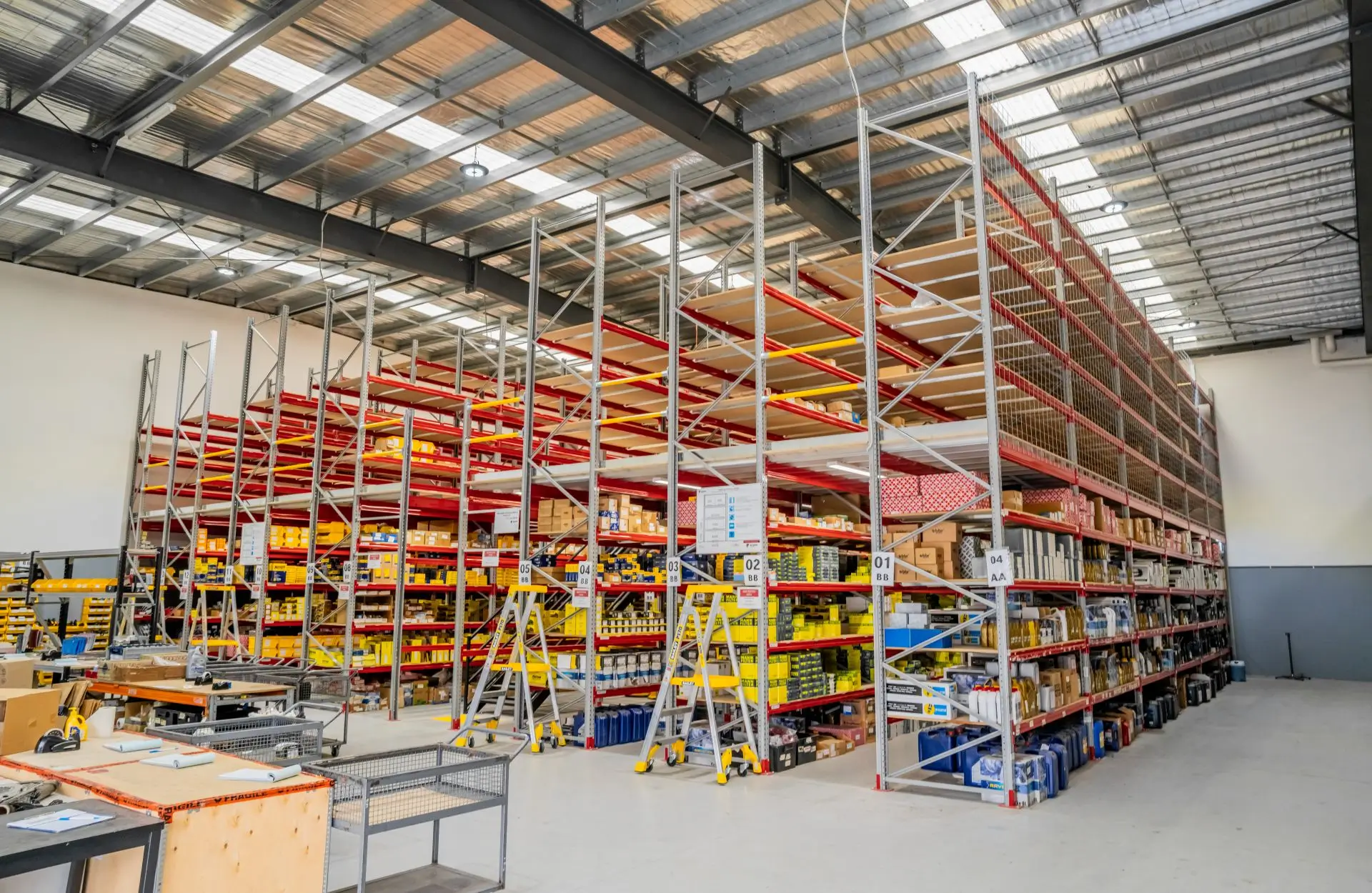
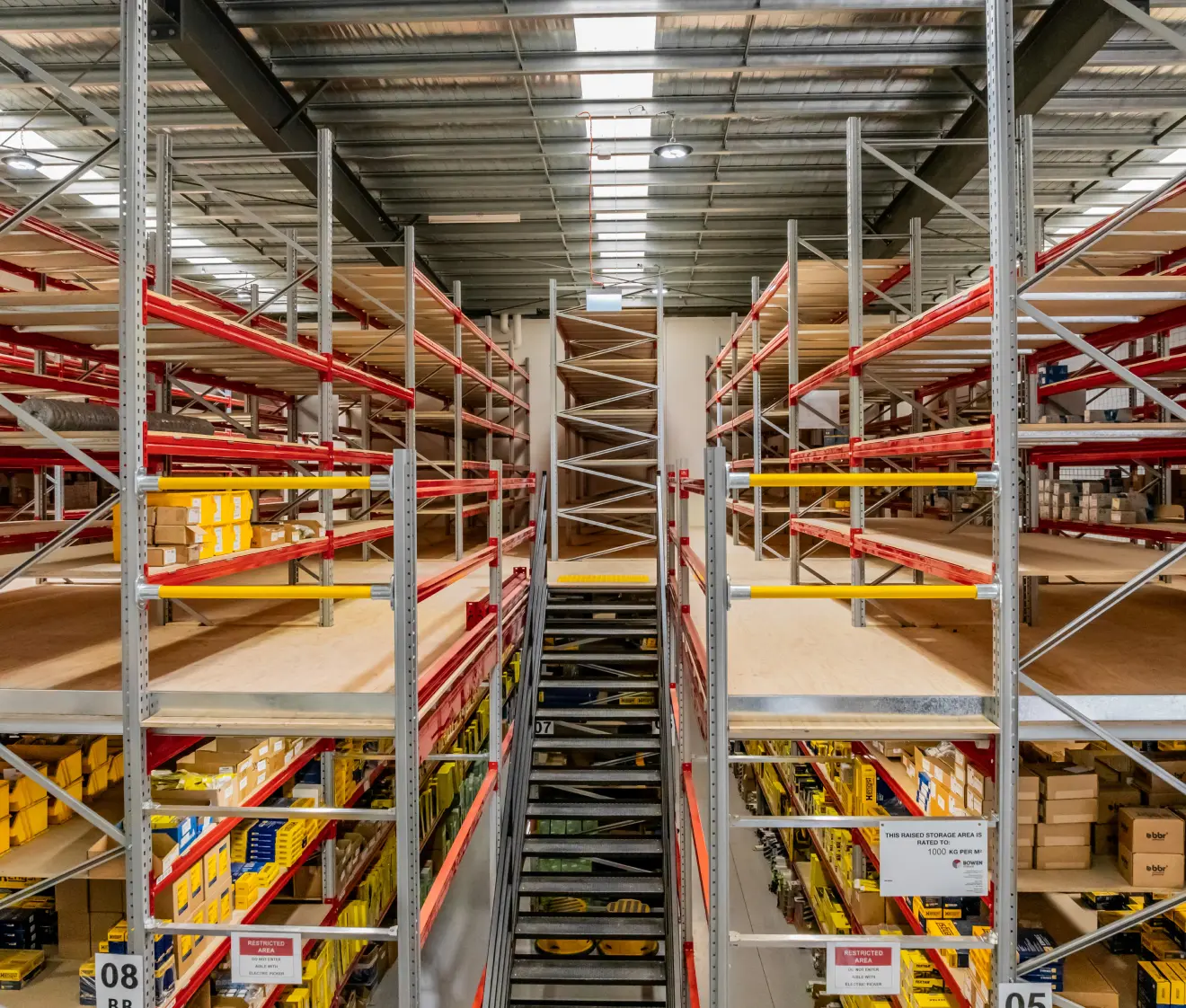
What Does 'Modular' Mean in Warehouse Storage?
In industrial storage, 'modular' means that a system is made from components that can be configured to suit the warehouse and adjusted as requirements change.
Depending on the storage system, this can include adjustable shelf levels, additional bays, different beam configurations, accessories and changes to the overall layout.
The principle is simple.
Storage should work around the operation rather than forcing the operation to work around the storage.
This approach is particularly useful for warehouses handling cartons, parts, tools and other hand-loaded inventory. It can also apply to larger storage systems, including pallet racking, where layouts and configurations need to accommodate different products, loads and operational requirements.
The important distinction is that "modular" describes the way a storage system is designed, rather than a particular product.
At Bowen, modular components form part of many different storage solutions. The appropriate system depends on the products being stored, available space, access requirements, handling methods and the way inventory moves through the facility.
Warehouses Rarely Outgrow Their Buildings Overnight
It is easy to think a warehouse has suddenly become inefficient.
In reality, it usually happens gradually.
A new product line needs somewhere to go.
A customer asks for shorter lead times, so the picking area moves closer to dispatch.
An unused corner becomes overflow storage during a busy period and never really goes back to being empty.
Every decision makes sense at the time.
After a few years, though, the warehouse can look very different from the one that was originally designed.
That is often when businesses start looking for more space.
Sometimes they genuinely need it.
Just as often, they need a storage system that better reflects how the warehouse operates today.
Storage Should Adapt to the Business
Storage is sometimes treated as permanent infrastructure.
The business is not.
Inventory changes. Product dimensions change. Picking frequencies change. Even the way customers place orders can influence how products move through a warehouse.
When storage cannot adapt to those changes, people usually do instead.
Staff work around awkward layouts. Frequently picked products end up further from dispatch than they should. Shelves hold inventory they were never intended to store because that is simply where space was available.
These workarounds are rarely deliberate.
They happen because the operation has changed while the storage has remained the same.
A well-designed storage system can reduce those limitations.
For example, selective pallet racking systems can provide direct access to palletised inventory, while Long Span shelving and small parts storage can accommodate cartons, components and hand-loaded products.
The result is not necessarily one type of storage.
It is a combination of systems designed around the different requirements within the warehouse.
Flexibility Is About More Than Shelving
When businesses start thinking about new storage, the conversation often centres on capacity.
How many shelves will fit?
How many bays are required?
How much inventory can the warehouse hold?
These are important questions.
They are not the only questions that matter.
A better starting point is to understand how the warehouse operates and how that operation may change.
If product ranges expand, can additional storage be incorporated?
If picking methods change, can the layout be adjusted?
If a new business function is introduced, can the existing storage infrastructure accommodate it?
These questions help determine whether a storage design will continue to support the business as it grows.
Modular design can contribute to that flexibility, but it should not be considered a storage solution in isolation.
The right approach is to select the appropriate storage systems first, then configure those systems around the operation.
Small Changes Have a Way of Adding Up
Warehouse improvements do not always arrive as large projects.
Sometimes they are surprisingly ordinary.
Adjusting shelf heights.
Adding another bay.
Moving a product category closer to dispatch.
Reconfiguring a storage area to suit new inventory.
Changing the location of frequently accessed stock.
On their own, these changes may not seem significant.
Together, they can shorten travel distances, improve accessibility and make everyday tasks easier.
The benefit comes from having storage that can respond when the operation changes.
Case Study: Integrated Storage for a Truck Dealership
A leading truck dealership needed to expand its business and secured a new location supporting its sales, servicing, parts and rental operations.
Rather than treating each storage requirement separately, Bowen assessed the facility as an integrated operation.
The resulting storage system combined pallet racking, Long Span shelving, small parts shelving, high-density cabinets and a dedicated workbench.
Each system addressed a different storage or handling requirement.
Pallet racking provided storage for larger and heavier inventory, while shelving and cabinets accommodated smaller parts and hand-loaded items. Workbench areas provided dedicated space for associated operational tasks.
The result was a coordinated storage system designed around the different products, weights, sizes and handling requirements within the business.
This is an important distinction.
The objective was not simply to install "modular shelving".
It was to design a storage system that could accommodate different inventory types while supporting efficient identification, retrieval and replenishment.
Good Storage Decisions Start on the Warehouse Floor
Storage projects rarely stay focused on shelving once the operation is properly assessed.
A customer may initially ask whether they need more shelving.
Once the warehouse is reviewed, the bigger opportunities can become apparent.
Fast-moving products may be stored too far from dispatch. An area intended for temporary overflow may have become permanent. Existing shelving may still be suitable, but the layout around it may no longer reflect current workflows.
That is why understanding the operation comes before recommending a storage system.
The assessment should consider the building, inventory, access requirements, handling methods, picking processes and future growth.
It should also consider the interaction between different storage systems.
For example, pallet racking design and layout needs to reflect the products being stored, load requirements, available space and how the racking will be used.
The same principle applies to shelving and other storage equipment.
The best result comes from designing the complete storage environment around the operation.
Designing for the Warehouse You'll Have Next
Warehouse design is not about predicting the future.
Nobody knows exactly how inventory, customer expectations or order profiles will look five years from now.
What businesses can do is avoid creating unnecessary limitations.
A storage system that worked perfectly when it was installed may eventually become less suitable as the business changes.
That does not mean the original decision was wrong.
It means successful businesses evolve.
Storage needs to accommodate that evolution wherever practical.
Modular design can help by allowing components and configurations to be adjusted as requirements change.
But flexibility starts with the overall design, not with a particular type of shelving.
Better Storage Does Not Always Mean More Storage
When businesses start running out of room, the first instinct is often to find more space.
Sometimes that is the right move.
Just as often, the opportunity is to make better use of the space, equipment and workflows already available.
That might mean changing the storage layout.
It might mean increasing usable storage density.
It might mean relocating fast-moving inventory.
Or it might mean combining different storage systems to better match the inventory profile.
The objective is not simply to install more shelving.
It is to create a storage environment that supports the way the business operates.
At Bowen, we have spent more than 40 years designing engineered storage systems for warehouses, distribution centres and retail facilities.
Our approach starts with understanding the operation, rather than assuming one storage product will suit every application.
Depending on the requirements, a solution may incorporate pallet racking, Long Span shelving, small parts storage, cabinets, workstations, mezzanines or automated storage systems.
These systems can then be configured and integrated to suit the available space, inventory and workflows.
That is where modular design has its greatest value.
It gives storage systems the ability to change where the application requires it, without treating "modular shelving" as a product in its own right.
If you are reviewing your current storage or planning for future growth, contact Bowen Storage to discuss a storage system designed around your operation.